
Introduction
Leverage is among the most potent resources that traders, particularly those involved in prop firm competitions, can apply for the benefit of their trading efforts. Leverage helps to control bigger trades through relatively small sums of money, hence the possibility of meeting set profit objectives more easily.
Traders usually participate in the funded trading platforms for the purpose of using bigger amounts of trade capital without involving themselves significantly in terms of capital contribution. Leverage is, therefore, an important aspect to understand for the sake of avoiding the risks associated with its misapplication, which results in account drawdowns.
What Is Leverage Trading?
It is common for many newbies to want to know what is leverage trading because it is one of the most common terms in the forex market.
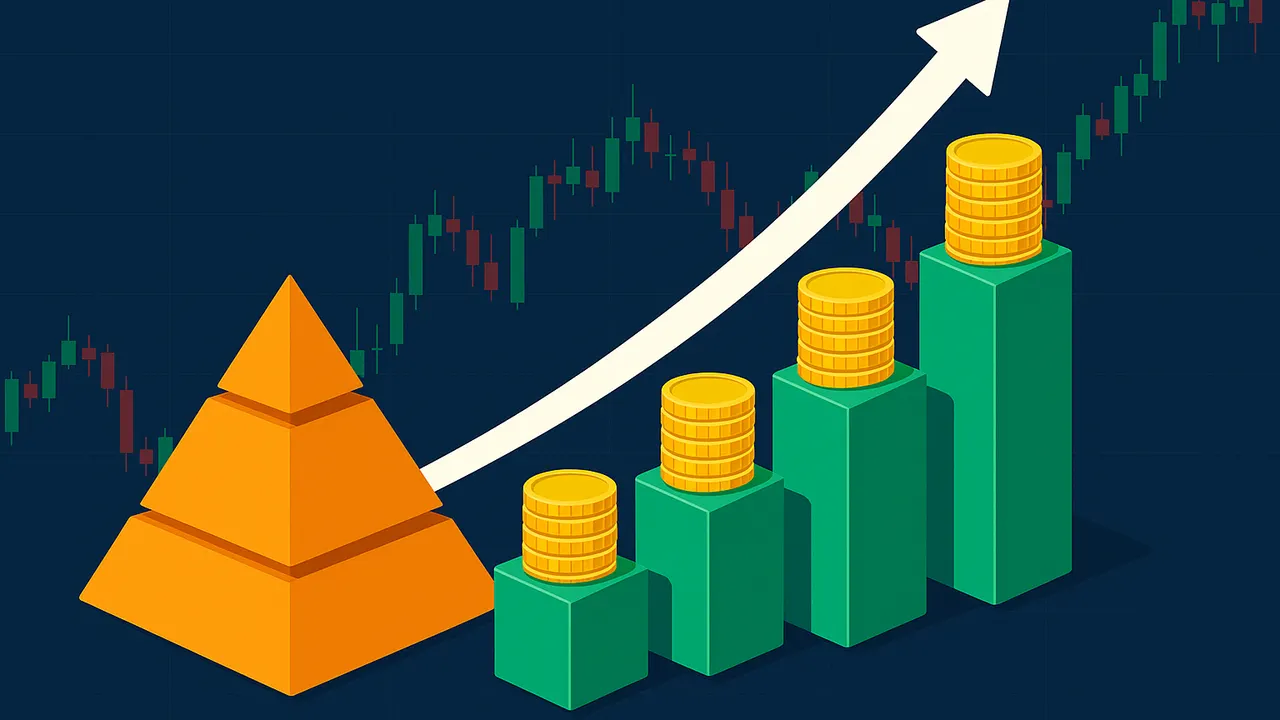
Using leverage enables the trader to borrow buying power from brokers or proprietary trading organizations to trade in larger volumes compared to his/her capital.
This can be illustrated as follows:
- By using 1:100 leverage, a trader is able to control $100,000 in the market by depositing $1,000 in his/her account.
This increased position helps the traders capitalize on the small movements experienced in the forex market.
Why Leverage Is Important in Prop Firm Challenges
Most of the prop firm issues will demand that traders make certain profits in a certain period of time without exceeding certain drawdowns.
Without the use of leverage, it would have been difficult for most people to meet their profit objectives. With the use of leverage, traders can be able to do the following:
- Increase positions size
- Enhance profits
- Efficiently meet the targets.
- Make several trades using small capital.
Faster Progress Toward Profit Targets
There are many advantages of leverage, one of which is the fast growth of account performance.
For instance:
- With reasonable leverage usage, a trader can make money even when prices move by only several points.
It can become handy in situations when the trader needs to meet his goals (i.e., profit 8% or 10%), which can be hard without the use of leverage.
Improved Capital Efficiency
Leverage enables traders to make better use of their capital. Instead of putting large sums of money into one trade, traders can allocate themselves to several positions.
Benefits that come from leverage include:
- Diversification of trades
- Less dependence on one trade
- Better management of market opportunities
Professional traders tend to employ leverage prudently rather than recklessly.
Leverage and Instant Funding Programs
Risk ManaFirms have also started offering instant funding, where one can open a funded trading account instantly without having to go through lengthy evaluation periods.
In such cases, the value of leverage increases because the trader has an increased buying capacity straight away. Nonetheless, traders still have to be careful when trading with the funded accounts since they will have certain loss limits.
Regardless of being able to have instant funding, one has to know how to make good use of the leverage provided.
Risk Management Is Essential
Even though leverage may enable a trader to meet the challenges posed by prop firms, improper use of leverage may lead to higher losses.
This is the reason why any funded trader worth his salt always combines leverage with good risk management.
The key principles include:
- Stop loss application
- Small percentage per trade
- Emotion-free decision-making
- Good trading system design
- Position size management
Professional traders prioritize consistency over leverage.
Avoiding Common Leverage Mistakes
Most novices use leverage incorrectly since they concentrate only on the profit-making aspect. Such mistakes can be:
- Trades that are too large
- Over-trading
- Not using stops
- Trading in volatile news times
- Taking chances was not necessary
These may cause one to violate the drawdown limits for the proprietary firm evaluation tests.
Leverage trade means that one should know the risk factors attached to it.
Choosing the Right Leverage Level
However, not all traders need to utilize leverage maximally. Factors that influence the optimal leverage include:
- Trading approach
- Market situation
- Level of experience
- Risk tolerance
The scalper may opt for average leverage, given that he operates in small price variations. Swing traders normally go for low leverage to keep their accounts stable.
Funded traders generally concentrate more on growth than on trading.
How Leverage Supports Consistency
Leverage will help traders be flexible when facing any difficulties with their prop firm. With the correct position sizing and proper exposure, traders will have consistent gains without the risk of losing money.
Consistency is among the key characteristics that are highly valued by prop firms. Prop firms want traders who are disciplined and are able to control the risks of their trades.
When utilized correctly, leverage will allow for stable results.
Conclusion
Leverage plays an important role in helping traders pass the prop firm challenge due to increased buying power and improved capital efficiency. Knowing about leverage trading enables traders to make more out of the exposure in the market through sound risk management.
The availability of Instant Funding programs makes the process of obtaining a funded account easy, but success is still dependent on discipline and consistency. Although leverage will speed up account building for the trader, it should always be used wisely.
With good leverage and discipline in forex trading, together with sound risk management, the prop firm challenge becomes easier to pass.